The rapid acceleration of artificial intelligence has initiated a paradigm shift in global digital infrastructure. Modern AI clusters have evolved from conventional, software-driven facilities into massive, gigawatt-scale computing environments. To sustain these intense, continuous workloads, modern computing hardware demands unprecedented levels of electrical power and sophisticated thermal management. Historically, this sudden growth has created tension within local municipal areas, raising concerns over grid reliability, localized water scarcity, emissions, and aesthetic impact.
To reconcile these developments with environmental and social sustainability, this blueprint provides an actionable framework for infrastructure planners. By transitioning from resource-extractive operational models to a circular, regenerative architecture, the modern AI datacenter can operate with zero net impact on local resources. This approach actively revitalizes municipal economies, public spaces, and academic institutions, establishing a sustainable path forward.
Click the embedded link to experience an interactive demonstration of the six pillars of Responsible AI Datacenter design:
https://gemini.google.com/share/4095fd068075
Pillar 1: Zero Water Impact
Traditional datacenter architectures rely heavily on evaporative cooling towers to dissipate heat, consuming significant volumes of water. A medium-sized facility can consume up to 100 million gallons annually, while large-scale hyperscale sites draw between one and five million gallons per day. Under peak conditions, this consumption matches the water demand of a town of up to 50,000 residents.
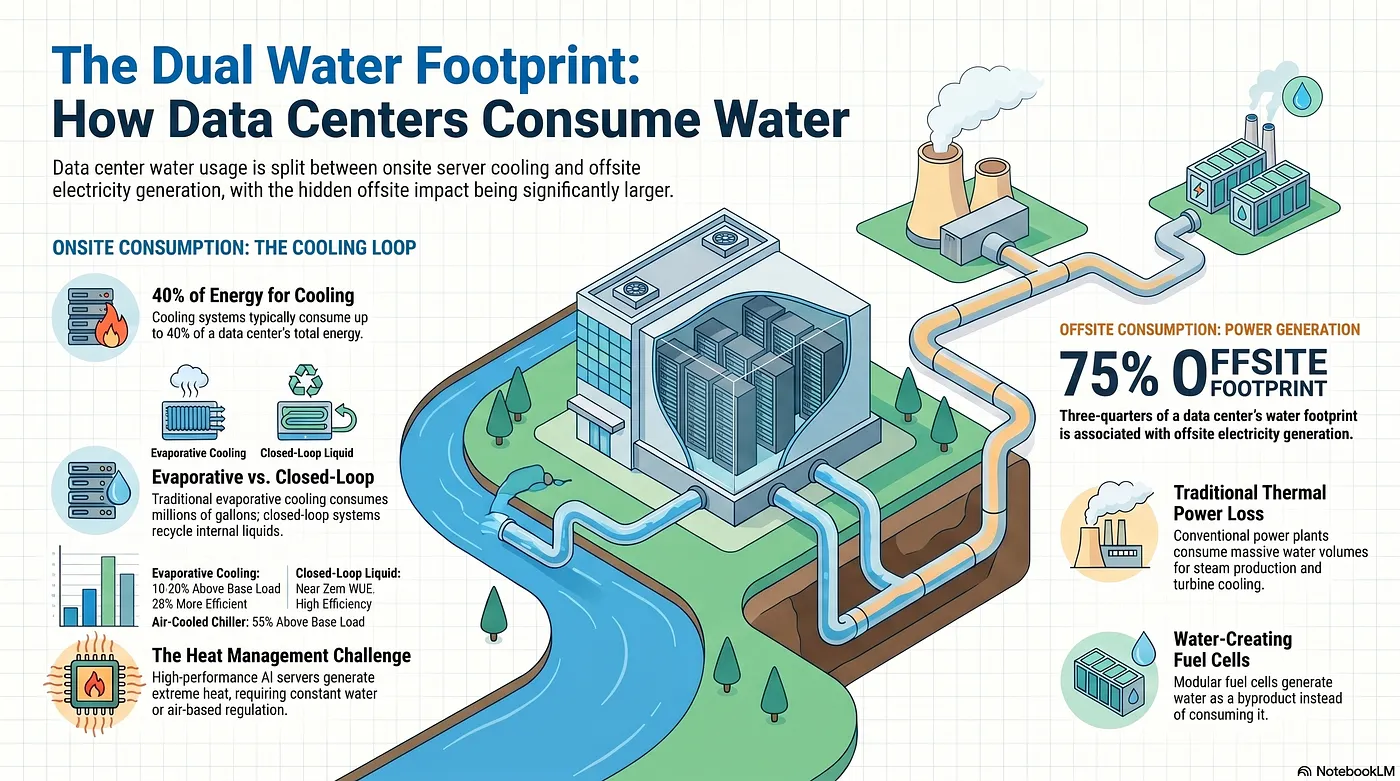
Compounding this local challenge, the water-power nexus introduces a large, indirect water footprint. Thermoelectric generation plants, which rely on natural gas, coal, or nuclear energy to produce electricity, require massive water withdrawals for steam generation. In 2022, thermoelectric utilities accounted for 40% of all annual water withdrawals in the United States, representing approximately 48.5 trillion gallons.
By 2030, off-site electricity generation is projected to drive 72% of the total water footprint associated with datacenters, shifting immediate resource risks upstream to the electrical grid. Locally, these demands can strain public supplies; for example, in 2023, datacenters in Northern Virginia consumed nearly two billion gallons of water — a 63% increase from 2019 — accounting for 3% of total consumption in the Potomac River Basin.
To achieve zero water impact, planners must eliminate on-site water evaporation and reduce upstream grid dependence. Traditional open-loop evaporative cooling towers, which lose millions of gallons daily to evaporation, must be replaced by next-generation closed-loop technologies.
A premier solution is the installation of direct-to-chip liquid cooling loops. This technology circulates a fixed volume of treated water, often mixed with propylene glycol to adjust boiling and freezing points, directly across the silicon chips. Heat is absorbed and transferred to a closed facility loop, where it is dissipated using mechanical dry coolers, radiator fans, or high-efficiency economizing chillers, requiring no continuous freshwater supply.
While mechanical air cooling historically introduced an energy penalty, next-generation liquid-cooled servers can operate reliably at elevated coolant temperatures. This capability allows economizers to leverage outdoor air across a wider operating range, minimizing the power overhead.
Additionally, emerging direct-to-chip two-phase cooling and immersion systems utilizing dielectric oils or advanced refrigerants reduce on-site water consumption to near zero. For gigawatt-scale sites, integrated thermal architectures utilizing centrifugal chillers and coolant distribution units (CDUs) can eliminate standard cooling towers entirely, preventing the loss of over 12 million gallons of water daily.
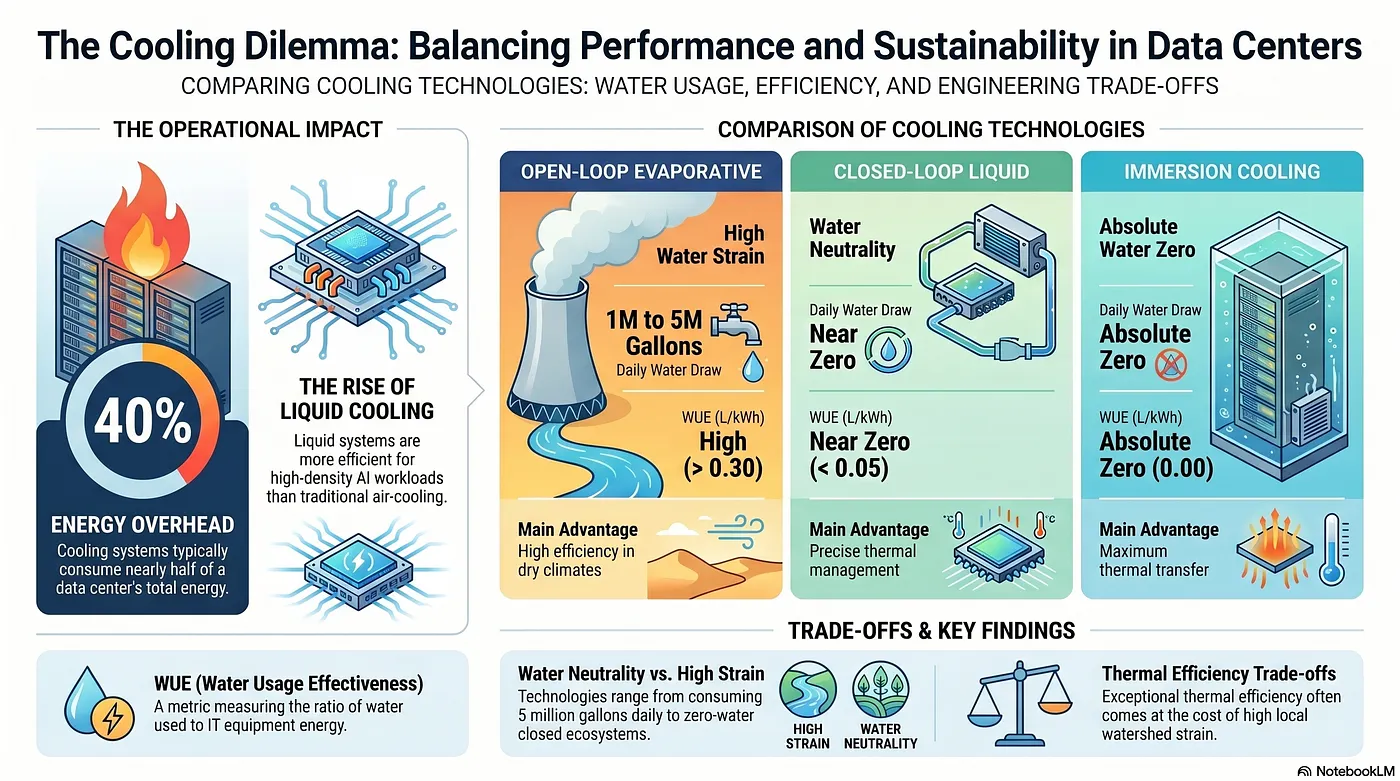
To protect municipal water supplies, any minor water demands for human administration or humidification should be sourced from reclaimed municipal wastewater or treated industrial groundwater. Microsoft’s next-generation datacenter designs, which consume zero water for cooling, avoid the evaporation of over 125 million liters of water annually per facility. These systems operate with a Water Usage Effectiveness (WUE) of near zero, compared to historical industry averages.
Pillar 2: Zero Power Impact
The rapid expansion of AI workloads is driving unprecedented growth in electricity consumption. In 2024, United States datacenters consumed approximately 183 terawatt-hours (TWh), representing 4% of the nation’s total electrical energy. By 2028, this demand is projected to scale to between 325 TWh and 580 TWh, accounting for up to 12% of the country’s electricity.
This massive growth strains an aging electrical grid where nearly 70% of transmission lines are over 25 years old. In many jurisdictions, any substantial new grid draw challenges efforts to maintain reliable service, forcing utilities to invest in costly transmission upgrades that are often passed on to residential ratepayers through higher utility rates.
To address these challenges, states are enacting targeted legislative and regulatory measures. The Washington State Governor’s Data Center Workgroup and the subsequent House Bill 2515 (addressing emerging large energy use facilities exceeding 20 megawatts) highlight the growing focus on ratepayer protection.
These initiatives propose cost-allocation tariffs ensuring that large computing facilities bear the full cost of any grid upgrades they necessitate, preventing cost-shifting to residential consumers. Similarly, Virginia’s 2026 General Assembly introduced bills like SB 253 and HB 1393, designed to prevent the shifting of energy import costs to ordinary households.
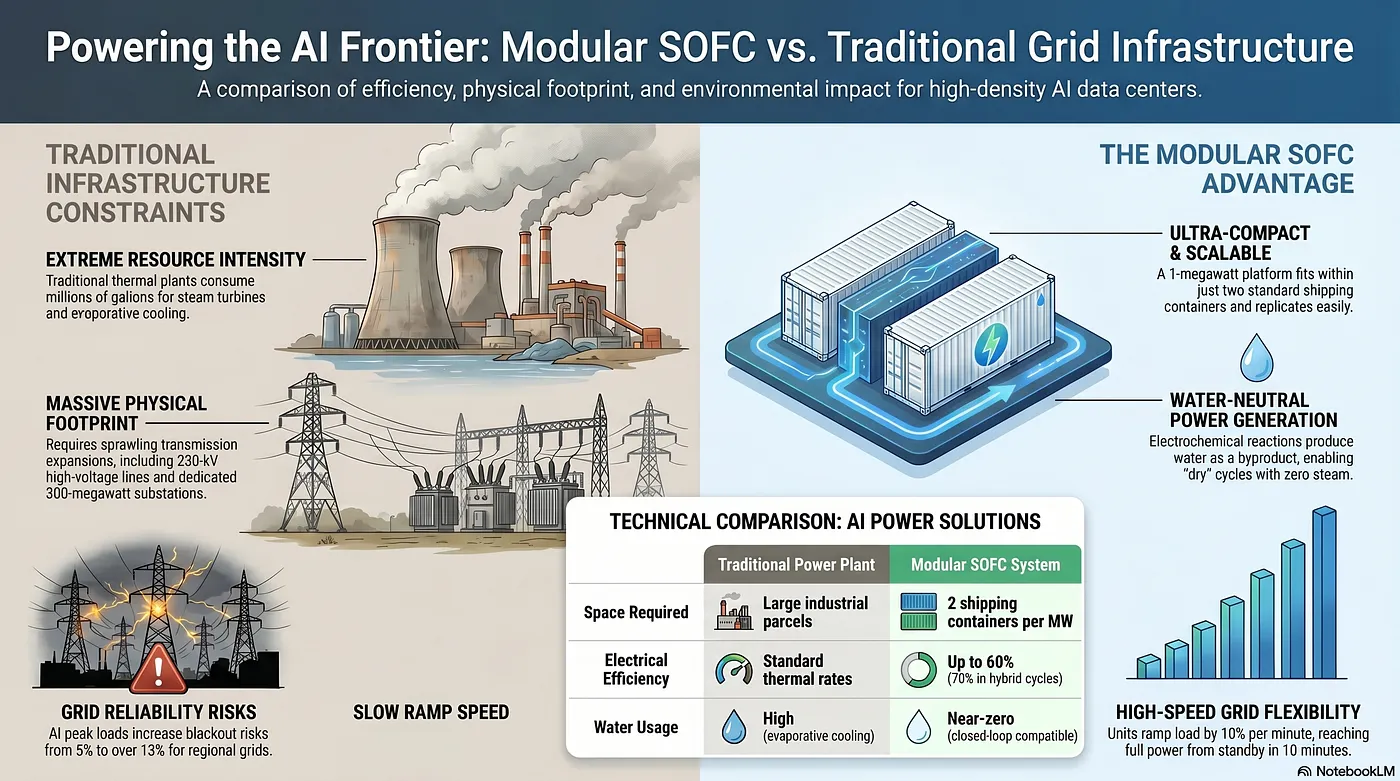
To achieve zero power impact on the local grid, planners must integrate behind-the-meter, on-site baseload generation. Solid Oxide Fuel Cells (SOFCs) offer a reliable solution for on-site power generation.
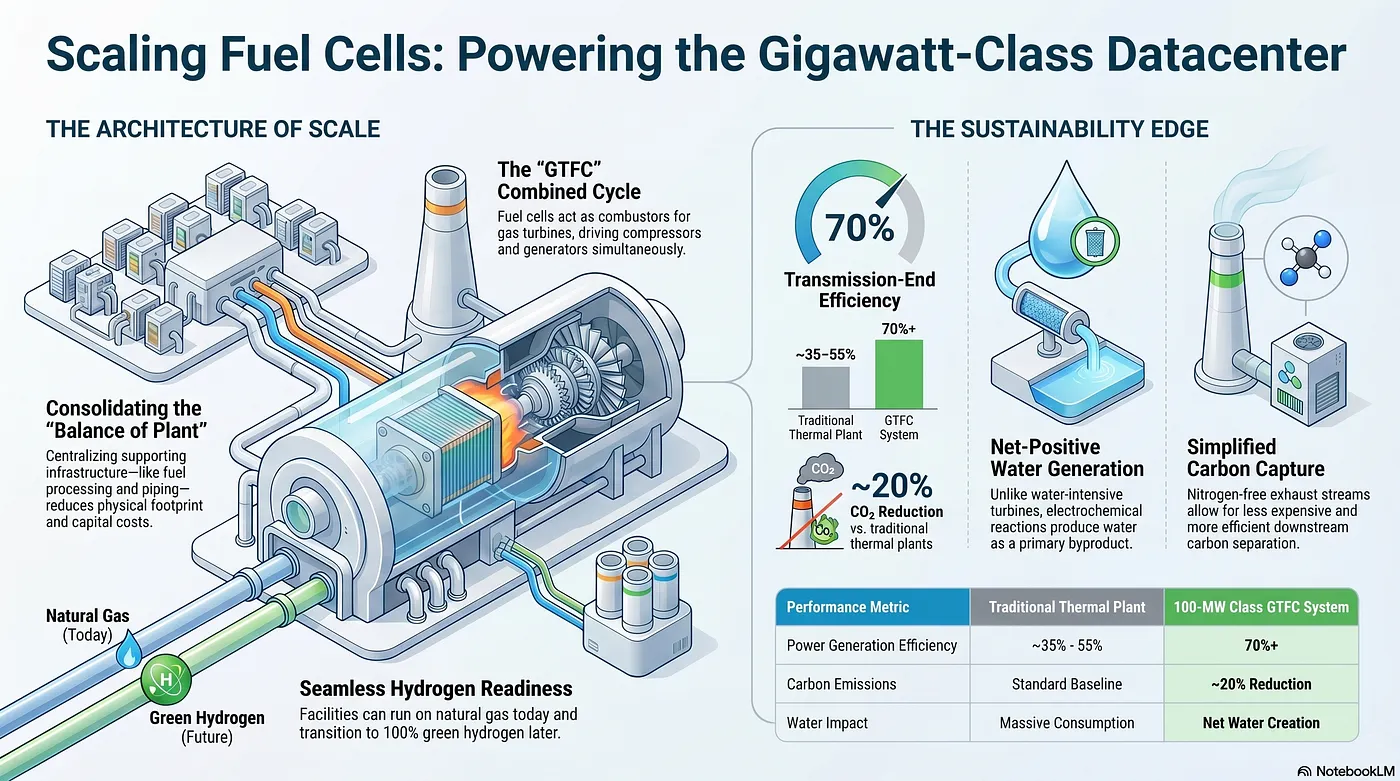
Operating on natural gas, biogas, or hydrogen, SOFCs convert chemical energy directly into electricity through an electrochemical process rather than combustion. This achieves a high electrical efficiency of 50% to 60% — a 30% improvement over standard combustion technologies — while virtually eliminating criteria air pollutants.
Planners are increasingly deploying these systems in multi-megawatt configurations. For example, CoreSite has deployed this technology in Milpitas, California, and Boston, Massachusetts, while Nebius Group secured a multi-year master agreement with Bloom Energy for an initial 328 megawatts of fuel cell capacity to power its AI campuses independently of the local grid.
To support highly oscillating machine learning training and inference workloads, which create rapid, alternating spikes and troughs in power demand, on-site fuel cells must be paired with ultra-capacitors. These capacitors serve as an instantaneous energy buffer, discharging and recharging in milliseconds to handle power fluctuations without disrupting the fuel cell’s continuous baseload operations.
Furthermore, software-driven optimization can enhance energy efficiency. Microsoft’s Project Forge pools training and inference workloads to increase hardware utilization to 80% or 90%, utilizing transparent checkpointing to run workloads when power is available.
Intelligent power harvesting systems can also recover unused electricity allocated to idle servers, reclaiming up to 800 megawatts of capacity across a global fleet since 2019. These technologies allow operators to optimize power delivery and achieve high efficiency, with some hyperscalers operating at a Power Usage Effectiveness (PUE) of 1.09, compared to the industry average of 1.56.
Pillar 3: Zero Emissions and Regenerative Siting
The climate impact of the AI boom is a major concern for infrastructure planners. By 2030, current rates of AI growth could add 24 to 44 million metric tons of carbon dioxide to the atmosphere annually, equivalent to adding up to 10 million passenger cars to United States roadways.
A study from Cornell University published in Nature Sustainability indicates that while unchecked clustering strains local resources, a coordinated strategy combining smart siting, grid decarbonization, and operational efficiency can reduce carbon dioxide emissions by 73% and water consumption by 86%. Siting facilities in regions with clean electricity mixes — such as New York, or “windbelt” states like Texas, Montana, Nebraska, and South Dakota — dramatically improves the combined environmental footprint.
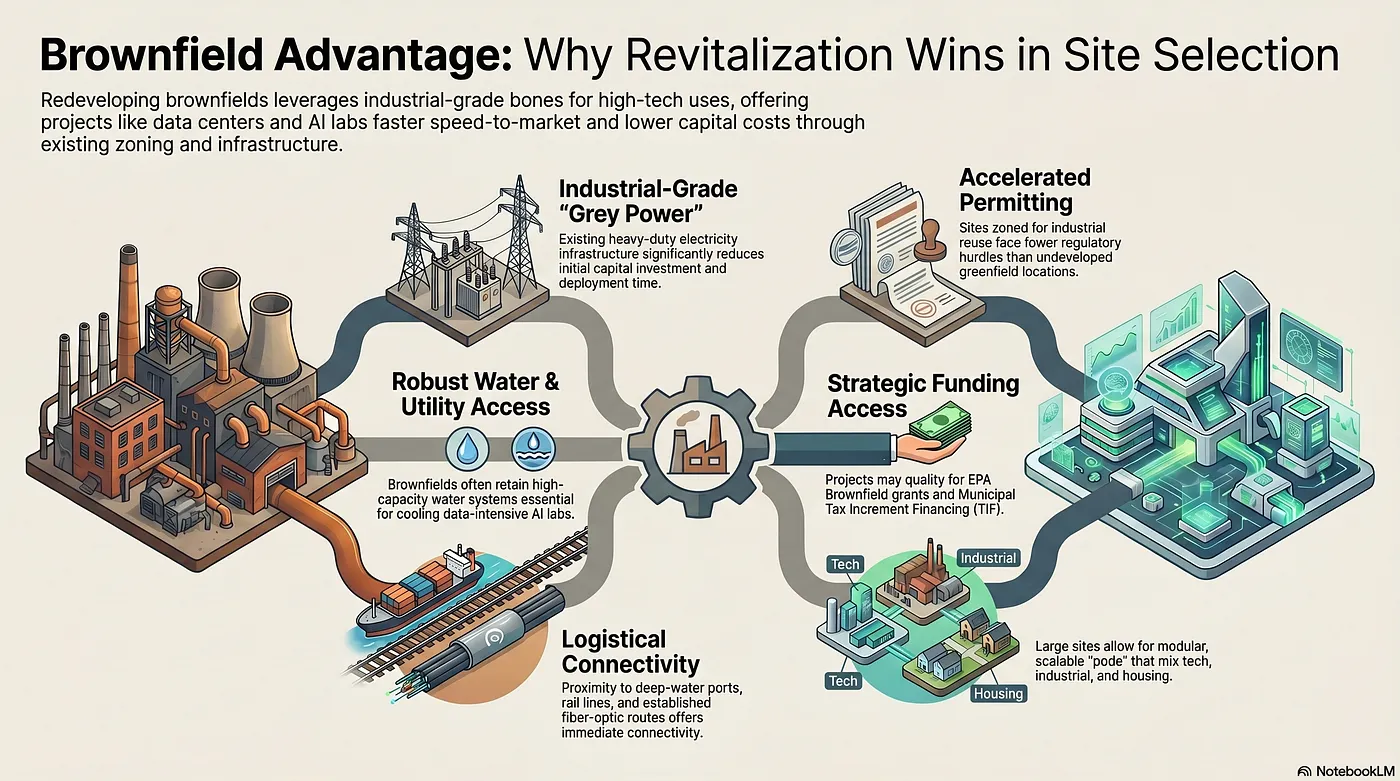
To achieve zero net emissions, planners must focus on regenerative land use by developing on underutilized industrial parcels, such as EPA-designated Superfund or brownfield sites. These properties, which include former manufacturing facilities, processing plants, landfills, and mining sites, often feature robust preexisting infrastructure, including high-capacity transport links, water lines, and industrial zoning.
By cleaning up these properties, developers can transform environmental liabilities into valuable local economic assets. For example, Meta successfully converted two adjacent brownfield textile and manufacturing sites in Forest City, North Carolina, into a modern datacenter campus using EPA brownfield assessment funds.
When redeveloping contaminated sites, planners must manage legal and technical requirements. Under the Comprehensive Environmental Response, Compensation, and Liability Act (CERCLA), developers can obtain liability protections as Bona Fide Prospective Purchasers, which requires compliance with all remediation guidelines.
Siting criteria typically require a minimum of 100 acres for a 100-megawatt campus-style facility. Flat, rectangular sites with slopes of less than 2% to 5% are preferred, while slopes exceeding 15% are generally avoided due to construction risks.
Additionally, facilities must be carefully designed to prevent the migration of underground contaminants. Construction must avoid disturbing capped soils, active groundwater extraction wells, or other engineering barriers. In some cases, treated groundwater from site remediation can be safely reused for closed-loop cooling, provided the reuse is consistent with long-term cleanup remedies.
Pillar 4: Community Engagement and Economic Reciprocity
The installation of a hyperscale datacenter represents a multi-billion-dollar capital investment, yet local populations often voice concerns that these developments consume significant resources while providing limited direct, long-term employment. To address these concerns, planners should implement structured economic reciprocity agreements that direct financial benefits back to the host community.
Tax revenue generated from datacenter equipment can be substantial. In leading jurisdictions, these revenues are used to lower property taxes for local residents, fund school construction, or establish municipal housing funds.
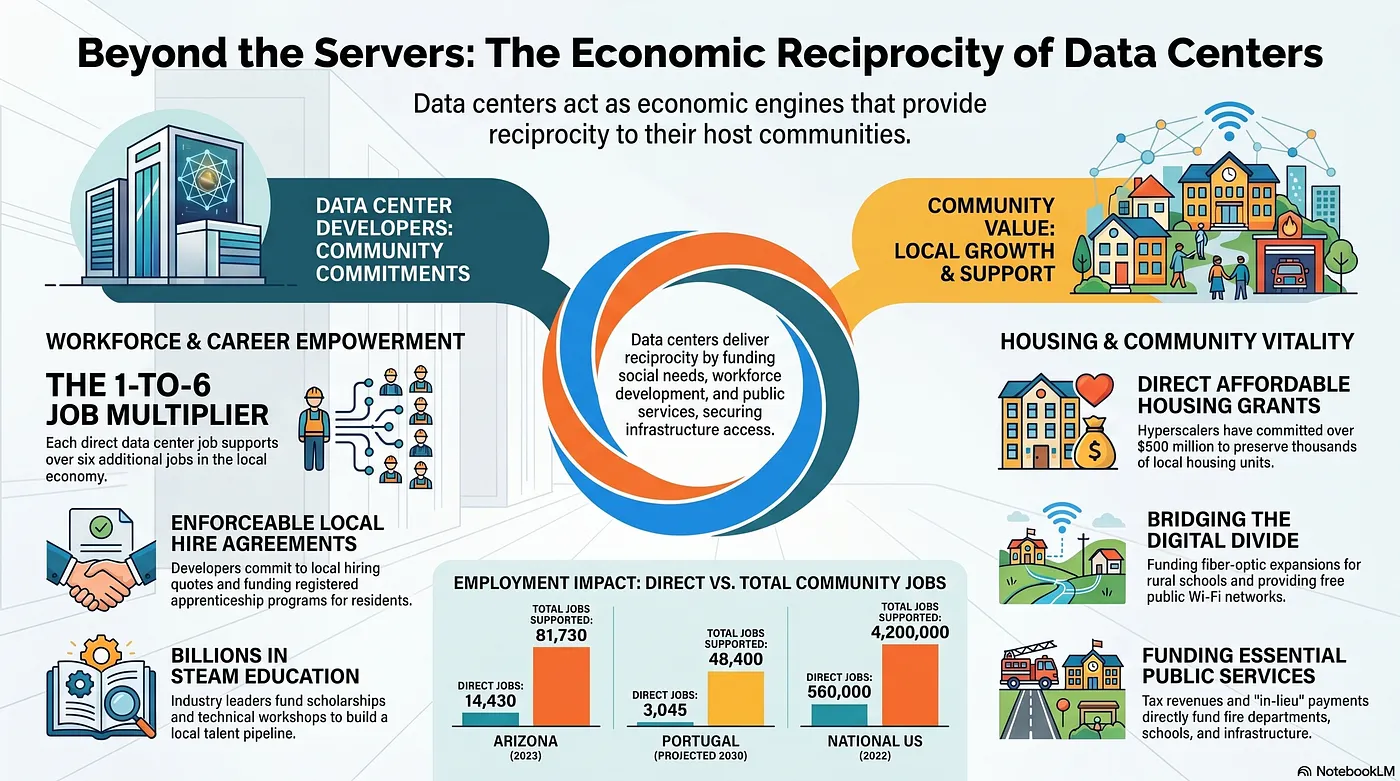
For example, Loudoun County, Virginia, collected $895 million in datacenter tax revenues in 2025, which helped reduce local property tax rates and fund new public schools. Prince William County generated $280 million in 2025, lowering real and personal property taxes, while Henrico County committed $60 million from datacenter revenues to fund an Affordable Housing Trust Fund.
In Oregon, enterprise zones provide 15-year property tax exemptions to tech firms in exchange for capital investment, which has helped revitalize rural communities like Prineville and Hermiston by attracting ancillary support industries and creating living-wage jobs.
A macroeconomic analysis conducted by Copenhagen Economics reveals that the datacenter sector can serve as a catalyst for regional economic growth. In Portugal, the sector contributed €311 million to GDP and supported 1,700 jobs annually between 2022 and 2024, with technology workers earning an average of 37% more than the national median wage.
Under favorable investment conditions, the sector’s contribution is projected to reach up to €26.2 billion between 2025 and 2030, supporting nearly 48,400 jobs annually through direct, indirect, and induced effects, while fostering technology hubs in less densely populated areas.
Pillar 5: Beautification of Public Spaces
To prevent the visual degradation of surrounding neighborhoods by large, windowless structures, planners should implement thoughtful spatial designs that blend facilities into the local environment. Industrial buffer zones can be redesigned as shared public spaces, parks, and trails.
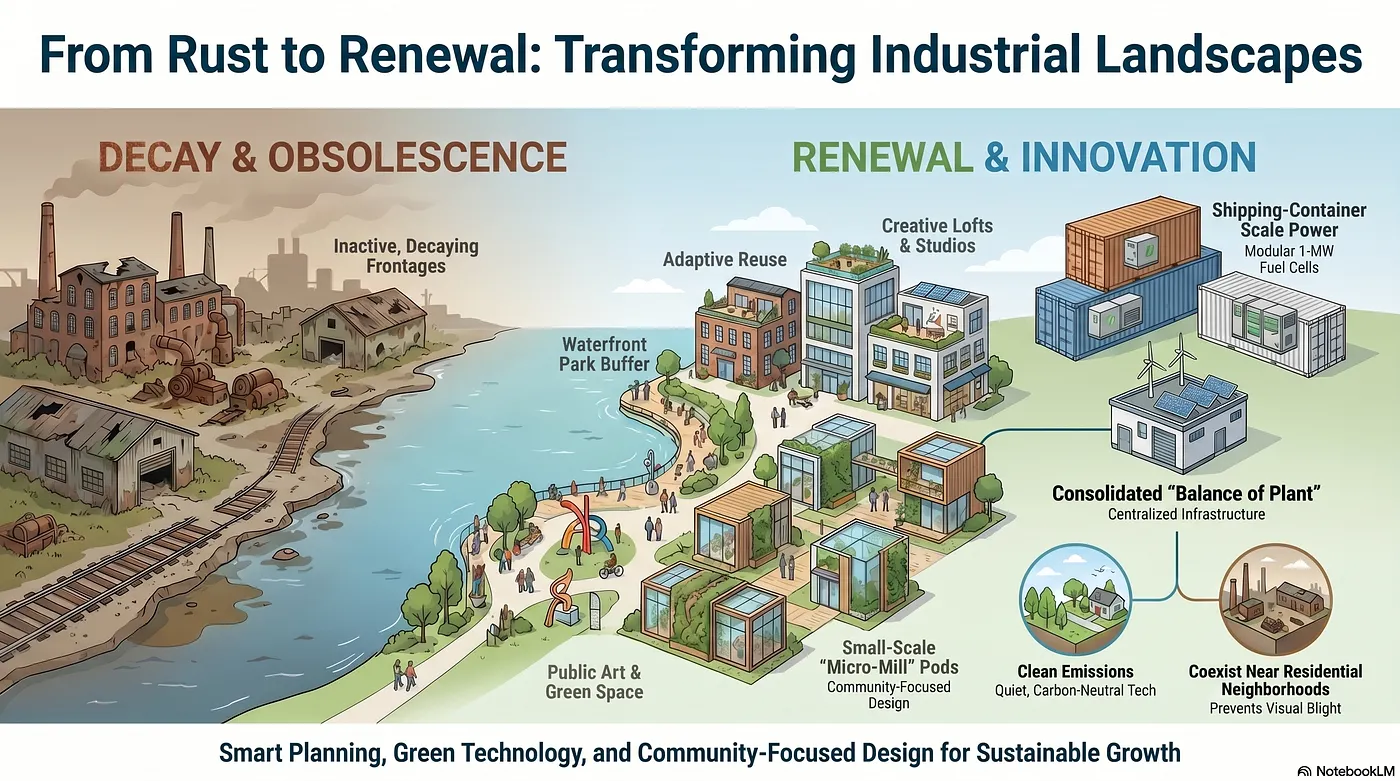
On-site power systems can help reduce the land footprint of these facilities. Traditional gas turbines and reciprocating engines require significant space, producing about 50 megawatts of power per acre.
In contrast, solid oxide fuel cells can be installed in a stacked configuration, doubling power density to deliver up to 100 megawatts per acre. This high power density minimizes the land required for energy infrastructure, allowing developers to set aside the remaining land for public parks, open space, and ecological buffers.
Planners should align perimeter landscapes with local open space and climate action plans. Using native, drought-resistant plants for landscaping minimizes irrigation needs and avoids straining local water resources.
Pillar 6: Education and Research Opportunities
The long-term success of high-tech infrastructure is enhanced by cultivating local scientific and technical talent. Rather than relying entirely on external labor, developers should partner with local educational institutions to create training and research pathways for area residents.
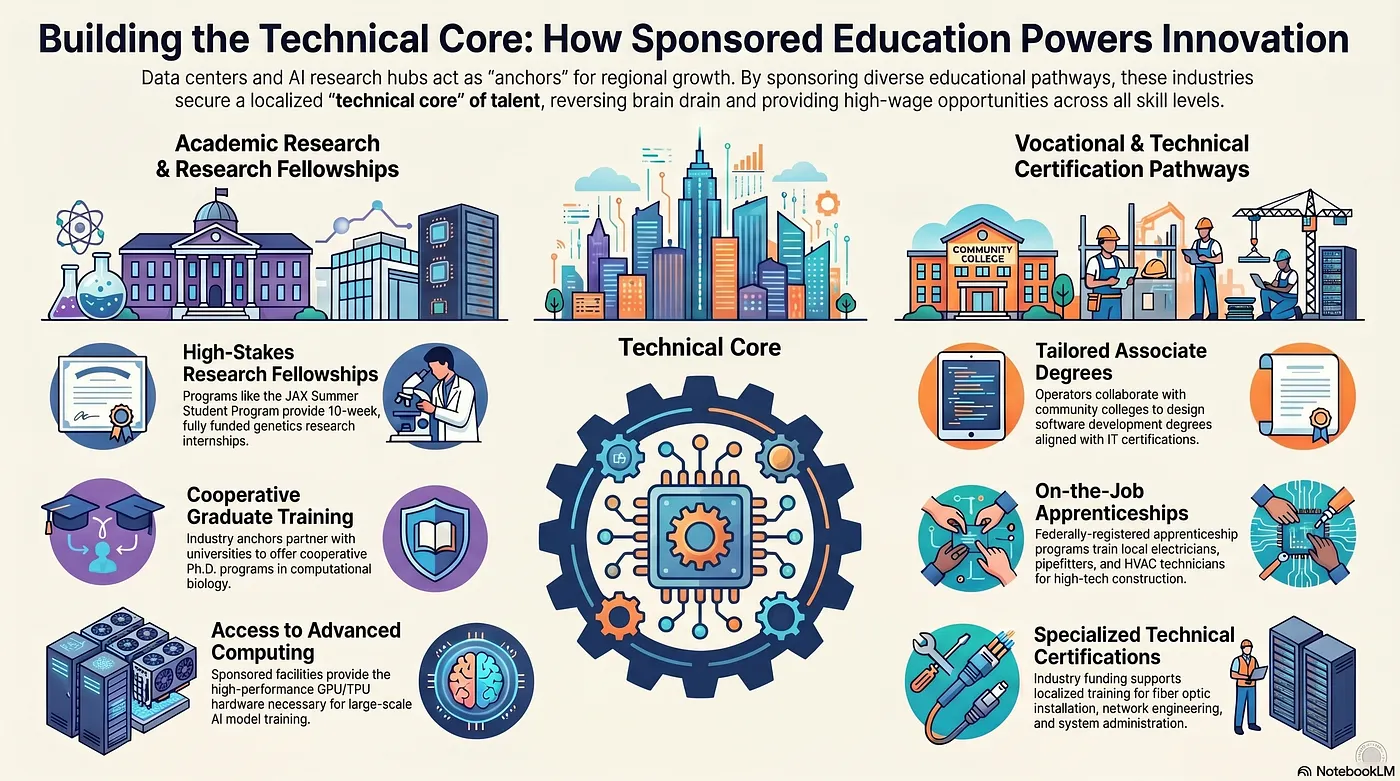
At the vocational level, developers should partner with local community colleges to establish specialized associate degrees and credentialing programs in datacenter management. In Hermiston, Oregon, Amazon’s partnerships with Blue Mountain Community College have produced targeted training programs with waiting lists, preparing local workers for high-paying facility management roles.
Similarly, the Department of Energy’s PACT Initiative supports regional academic-industry partnerships to establish hands-on training and credentialing programs in energy sector skills.
At the high school and undergraduate levels, developers can sponsor competitive research fellowships with an intensive ten-week research residency. Under the guidance of professional scientific mentors, students work on independent research projects rather than pre-packaged curricula, gaining experience in advanced fields.
A datacenter-funded summer fellowship can support student projects in computational biology, machine learning, systems genetics, data visualization, and environmental engineering.
The program should provide a competitive stipend with all travel, housing, and research supply costs fully covered to ensure accessibility for students of all socioeconomic backgrounds.
Throughout the ten-week program, students attend professional development seminars and weekly journal clubs with industry experts. The residency culminates in a formal student symposium, where participants present their research findings to academic and industry professionals, establishing a strong foundation for future scientific careers.
Actionable Recommendations for Infrastructure Planners
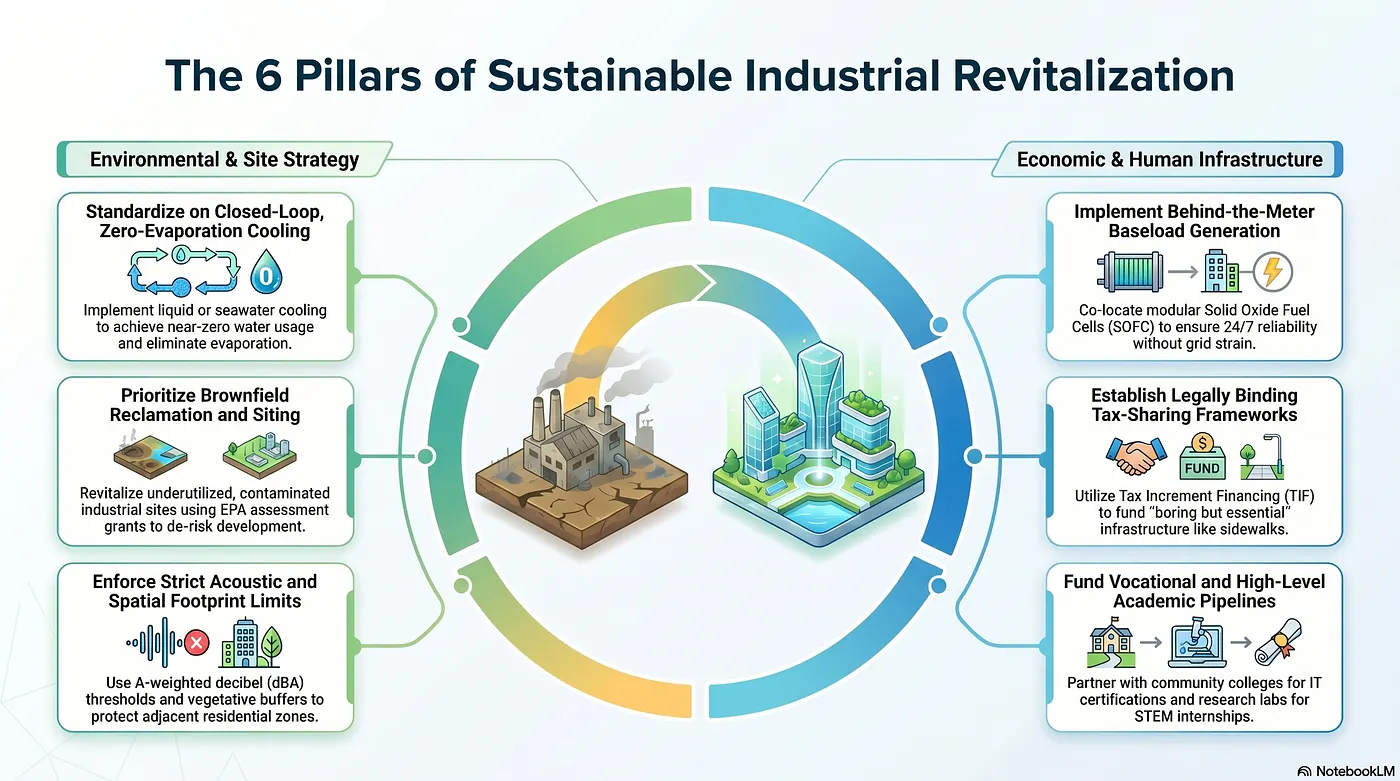
- Standardize on Closed-Loop, Zero-Evaporation Cooling: Transition from open-loop evaporative towers to direct-to-chip liquid cooling or two-phase refrigerant systems to reduce on-site Water Usage Effectiveness to near zero. Any residual administrative water demands should be met using reclaimed municipal wastewater.
- Implement Behind-the-Meter Baseload Generation: Avoid drawing power from local grids by deploying on-site Solid Oxide Fuel Cells paired with ultra-capacitors. This “fenced-off” setup satisfies high AI power demands while protecting residential ratepayers from grid upgrade costs.
- Prioritize Brownfield Reclamation and Siting: Utilize EPA redevelopment tools to locate suitable brownfield or Superfund sites with existing utility access. This approach returns contaminated land to productive use while maintaining compliance with CERCLA environmental controls.
- Establish Legally Binding Tax-Sharing Frameworks: Partner with local municipalities to structure tax-allocation agreements. This ensures personal property tax revenues from server upgrades are directed toward reducing local property taxes, building schools, and supporting housing initiatives.
- Enforce Strict Acoustic and Spatial Footprint Limits: Utilize high-density, stacked fuel cell systems to double power capacity per acre, saving land for public greenways and parks. Planners should keep noise levels to approximately 70 dBA at the source to preserve the local acoustic environment.
- Fund Local Vocational and High-Level Academic Pipelines: Collaborate with local community colleges to establish datacenter operations degrees, and fund fully residential ten-week summer research fellowships for high school and undergraduate students. This approach helps build technical skills and career pathways within the host community.
This report was generated by Google Gemini based on the research findings from various sources and real-world economic and environmental impact analysis. For more details, further research, or a complete list of sources, reach out to the editor who contributes this work anonymously.