Four quiet moves to help your family score concert and game-day tickets at face value using local models or Meta Muse.
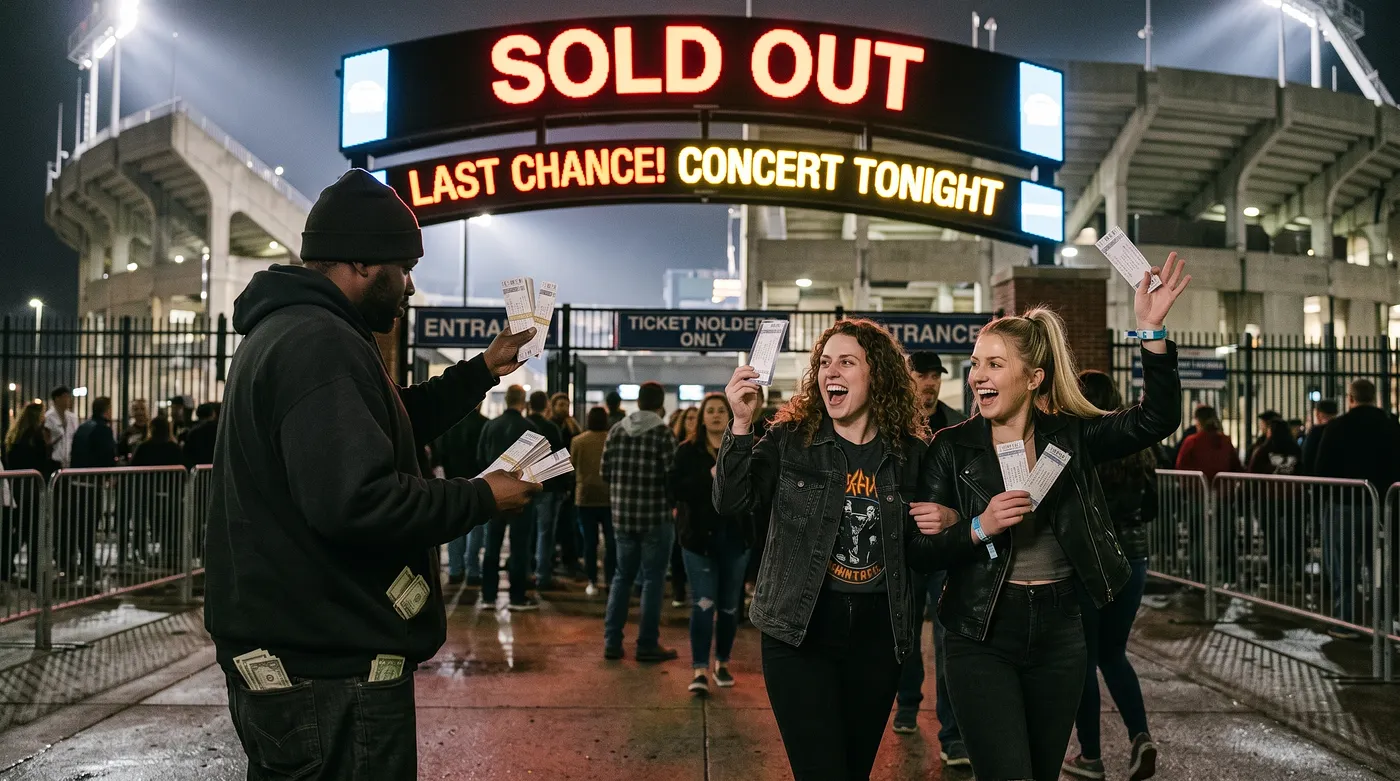
Fortunately they already had great tickets, thanks to this clever trick. — Image from Gemini
It’s 9:59 on a Friday morning. You’ve got the page open, your card saved, and your pulse spiking. At ten o’clock sharp, the queue loads, and a little progress bar informs you that there are forty thousand people ahead of you. By the time you reach the front, the seats you promised your family are gone. An hour later, those exact same seats appear on a resale site at four times the price.
You didn’t lose to forty thousand passionate fans. You lost to a handful of operations running thousands of automated accounts, rotating proxy networks, and stacks of virtual cards, all engineered to strip inventory in the first three seconds of a drop.
If you’ve been following this series, you’ve already explored the world of personal AI — either running a sovereign assistant that lives on your own machine, or experimenting with new sandboxed consumer environments like Meta’s Muse. The goal was simple: an AI you own, that keeps your data private, and takes real work off your plate.
Now let’s give that assistant a job almost everyone understands on a gut level: getting a regular person into the show or the big game they actually care about.
And let’s do it the right way.
The War You Shouldn’t Fight
The immediate temptation is simple: fight bots with a bot. Spin up a script or unleash an autonomous browser, point it at the ten o’clock sale, and tell it to hammer checkout.
Please don’t.
Major ticketing platforms deploy some of the most aggressive anti-bot defenses on the modern web. Virtual waiting rooms, mouse-movement heuristics, device fingerprinting, and dynamic proof-of-work challenges are all calibrated to catch automated clients. If you try to run an automated buyer — whether it’s an open-source script or Meta Muse running inside its cloud VM — the platform’s defense systems will detect data center IP ranges or robotic DOM interactions, resulting in an immediate queue kick or a banned account.
The legal perimeter is just as unforgiving. The federal Better Online Ticket Sales (BOTS) Act of 2016 makes it illegal to circumvent security controls or purchase limits on ticketing sites, enforced by both the Federal Trade Commission and state attorneys general. For years, enforcement was sporadic. That era has ended. Federal regulators have made fair ticketing access a centerpiece priority.
Recent enforcement actions lay out the exact tripwires:
- In August 2025, the FTC sued a large ticket broker alleging the use of thousands of illicit accounts, proxy IP pools, and automated circumvention to hoard tickets.
- In April, a federal court dismantled a key defense in that case: the broker argued the BOTS Act only covered conventional, old-school scripting bots. The judge firmly rejected that argument, ruling that the statute applies to any entity engaging in prohibited circumvention, regardless of whether the tool is a Python script, a sophisticated multimodal AI, or a room of paid operators. The law focuses on the circumvention, not the elegance of the code.
- Bipartisan legislation like the MAIN Event Ticketing Act continues to push for stiffer penalties, broader private rights of action, and transparency mandates.
The smart move isn’t trying to out-hack syndicates that spend millions on proxy infrastructure. It’s refusing to play their game entirely.
The Game You Can Win
Scalpers win on brute speed and sheer volume. That model is defensive, increasingly precarious legally, and vulnerable to detection.
A fan armed with a personal AI — whether hosted locally on your desktop or running inside a private cloud environment like Meta Muse — wins on three entirely different variables: information, patience, and legitimacy.
Your assistant can spot a schedule announcement before it trends on social media. It can aggregate every fan club, booster, or credit-card presale code you’re legitimately entitled to. It can track secondary-market price curves for weeks without fatigue. And it does all of this while you remain one genuine human, with one account, buying seats you intend to sit in.
Scalper cartels cannot replicate that strategy because it does not scale to commercial flipping. That is precisely why it works for you.
Here are the four moves.
Move 1: Hear About It First
Most people discover a tour or an away-game matchup after tickets are already trending. By then, priority tiers are locked and presale allocations are spoken for.
Your assistant can get ahead of this without web scraping. Ticket platforms operate official developer tools, such as the Ticketmaster Discovery API, which programmatically publish tour dates, kickoff times, venue specs, and presale schedules.
- On a Sovereign Local Agent: Using open standards like the Model Context Protocol (MCP), you can plug official ticketing and sports schedule APIs directly into your local model.
- On Meta Muse: You can configure background research tasks and scheduled triggers inside its secure VM environment to check official feeds.
Then you set your parameters in natural language:
“Monitor official schedule announcements for any dates featuring my top five artists within 150 miles, plus home rivalry games for the local baseball and hockey clubs.”
Once a day, the agent queries official databases, cross-references your preferences, and updates its local memory. When a date drops, it alerts you with operational specifics:
“The arena announced a Friday night matchup on November 14th. The season-ticket holder priority presale starts Tuesday at 10 AM, the credit card window opens Wednesday, and general sale is Friday.”
You transition from reacting to preparing.
Move 2: Collect Every Key You’re Entitled To
For high-profile stadium shows and championship series, a substantial portion of premium inventory is claimed during presales long before the general public queue opens.
Access is fragmented everywhere: artist fan clubs, season-ticket account rep emails, booster clubs, airline or credit card perks, streaming service top-listener rewards, and local venue newsletters. Most fans miss these opportunities because the codes are buried in promotions tabs or lost in forgotten accounts.
This is where private AI excels:
- Local sovereign agents can inspect your local email cache and calendar files securely, without your inbox contents leaving your computer.
- Meta Muse, utilizing its sandboxed credentials and isolated runtime, can surface loyalty codes and event notifications from connected services while keeping passwords compartmentalized behind its Sentinel permissions layer.
Your agent indexes these perks into a clean event profile:
- It flags your credit card brand’s entertainment portal.
- It pulls the unique six-character presale passcode sent to your inbox three weeks ago.
- It sets a reminder on your calendar with direct checkout links staged 10 minutes prior to drop time.
You aren’t skirting platform rules. You earned those access codes; your agent simply ensures you never miss a window.
Move 3: Show Up Prepared, Then Let the Human Drive
When sale morning arrives, remember the golden rule: On drop day, the human drives. The agent is strictly the spotter in the passenger seat.
Log in manually on your own personal device, using your regular residential connection. Wait in the virtual queue. Solve any interactive security puzzles yourself. You pass verification because you are a genuine customer, keeping your account completely in the clear.
The moment you clear the queue and the seat map renders, human panic typically sets in. Timer count-downs tick away, seat dots flash on and off, dynamic platinum pricing inflates row values, and obstructed views hide behind fine print.
This is where a screen-aware local assistant (or an agent observing your session) provides a calm, analytical edge:
“Section 112, Row 8 has two seats together at standard face value ($85 each). That’s within your target budget.”
“Warning: The seats in Section 104 are marked ‘Obstructed / Limited Sightline’ behind the visiting team dugout.”
“Skip the highlighted blue seats in the lower tier — they are dynamically priced ‘Official Platinum’ marked up 180% over standard pricing.”
You make the decision, click the seats, and complete the purchase. The AI never touches the cart, never spoofs traffic, and never triggers an anti-automation penalty. It simply equips you with clarity during a stressful checkout window.
Move 4: Let the Clock Work for You
What happens if you strike out during the initial drop, and resale prices jump to exorbitant levels?
Patience becomes your leverage.
A ticket to a live event is a strictly perishable asset. The second the puck drops or the opening chord plays, an unsold seat’s value drops to zero. That dynamic creates intense economic pressure on speculative resellers carrying unsold inventory.
For many regular-season games, non-peak concerts, and multi-night runs, secondary-market prices follow a predictable decay curve: they spike on initial sellout, stagnate, and then soften substantially in the 48 hours leading up to showtime. In sports, unexpected weather, injury reports, or a weekday schedule can cause ticket prices to tumble in the final three hours before game time.
Your assistant can monitor this decay across official partner APIs or public feeds without you obsessively refreshing apps:
“Watch two adjacent seats in the mid-tier for Saturday’s game. Target price: under $75 all-in per seat.”
When inventory hits your strike zone, it pings your phone:
“Secondary listings for Section 208 just dropped below your target — currently $68 including fees with four pairs available.”
Price decay isn’t universal — historic playoff games and once-in-a-generation stadium dates may stay elevated. But where demand has been artificially inflated by speculative resellers, the clock consistently works in your favor.
The Operational Rulebook
This playbook succeeds because it adheres to unambiguous operational boundaries:
- One human, one account, one card: Always use your legitimate, verified account.
- No network masking: Never route through commercial proxies, data center VPNs, or multi-session containers designed to spoof identity.
- No automated purchases: Never delegate queue completion, captcha solving, or final payment execution to an autonomous agent.
- Legitimate data streams: Use official developer APIs, structured platform endpoints, and your own personal inbox access.
- Personal utility only: Procure tickets solely for personal, family, and friend use within stated household limits.
These guardrails do not diminish your agent’s effectiveness; they preserve it. Every major enforcement action and anti-bot mitigation focuses on identity deception, purchase-limit evasions, and programmatic checkout hammering. Operating cleanly outside those vectors keeps your credentials safe and your purchases sound.
Sovereign Hardware vs. Managed Agentic Platforms
How should you choose between hosting this locally or using a platform like Meta Muse?
The Sovereign Approach (Local Hardware + MCP):
- Best For: Absolute data privacy, builders, and power users.
- Why It Matters: Your ticketing profile contains intimate insights: financial thresholds, musical tastes, team loyalty, and family schedules. Running locally via open models ensures your willingness-to-pay profile remains strictly confidential.
The Managed Platform Approach (e.g., Meta Muse):
- Best For: Fast setup, mobile access, and background multi-day monitoring.
- Why It Matters: Muse provides persistent cloud execution that works after you close your phone. However, exercise restraint: Muse’s automated web actions and Stripe integrations should be applied to tracking, planning, and price alerts — not deployed to automate high-demand ticket drops where platform safeguards will reject cloud clients.
From Personal Project to Community Impact
Once you’ve configured this system, the broader implications become apparent.
Ticketing remains one of the most frustrating experiences in modern digital life. Artists, athletic programs, and venues openly express frustration at seeing genuine fans priced out by automated intermediaries.
A personal fan concierge that prioritizes transparency — discovering events early, cataloging authorized presale codes, navigating chaotic seat selection, and tracking pricing trends — creates immense value. Whether you run it solely to take your family to the ballpark or share your setup with fellow booster club parents and fan communities, the principle remains identical:
You don’t have to beat bot cartels at their own game. You win by being organized, patient, and legitimate.
Configure your agent, set your watchlists, and enjoy the show.
Sources & Background
- MAIN Event Ticketing Act (H.R. 3564), U.S. House Committee on Energy & Commerce (2025–2026).
- Better Online Ticket Sales (BOTS) Act of 2016, 15 U.S.C. § 45c.
- Federal Trade Commission Consumer Protection Enforcement Updates (Ticketing & Anti-Circumvention Actions, 2025–2026).
- Congressional Research Service (CRS), Ticketing for Live Entertainment Events: Market Structure and Regulatory Approaches.