Before smartphones turned adolescence into a tracked logistics operation, a wave of loud, hook-driven bands gave the latchkey generation a soundtrack for total freedom.
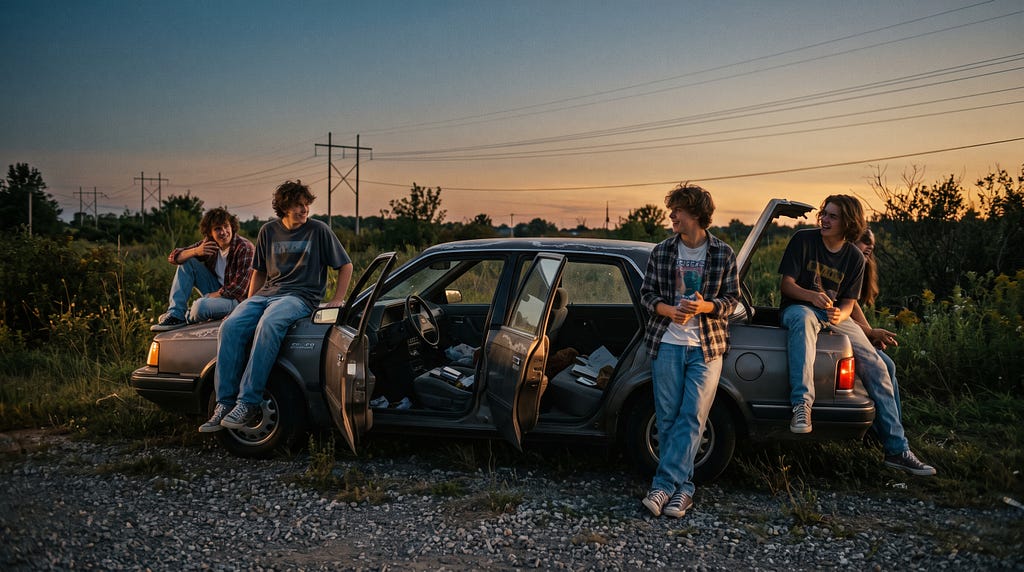
Image created by author using Gemini (AI)
Oct. 20, 2026 — Madkat Omega
A Note on Format: Soundtracking the Memory
I’m trying something a little different with this piece — a tactile, audio-paired essay where the prose is engineered to run in parallel with the music.
Scattered throughout the text below are five defining tracks from 1993 to 1996. To get the full frequency of what that brief window of unsupervised freedom actually felt like, don’t just read through the silence. Grab a good pair of headphones, cue up each song as you hit its corresponding act (or build the five-track queue in advance), and let the tape hiss, let the drop-D fuzz, and feel the kinetic tempo driving the narrative.
Consider it the cassette adapter in the passenger seat of an old sedan: roll the windows down, turn the volume up, and let the distortion do what words alone cannot.
It is 1:30 PM on a Tuesday in mid-July, 1995, and the front door clicks shut behind you with a hollow metallic thud.
Inside the house behind you, the central air is turned up to seventy-eight degrees to save on the electric bill, the landline sits silent on the kitchen wall, and there is no note on the refrigerator. Both parents are at work — or maybe just one, after the divorce papers cleared — and nobody will be home until six-thirty at the earliest. In your front pocket, you have a house key on a frayed nylon lanyard, a crumpled five-dollar bill, and six quarters. You do not have a cell phone. You do not have a tracking app broadcasting your coordinates to a parent’s desktop. Once your sneakers hit the driveway asphalt, you have effectively vanished from the institutional grid.
If you believe forty years of cultural retrospectives written by baby boomers and digested by algorithms, this was the exact moment a Generation X teenager was supposed to retreat into a darkened bedroom, pull a thrifted flannel shirt over their head, put on In Utero, and stare at the ceiling fan in existential paralysis. The dominant historical myth of the nineties insists that the latchkey condition was defined entirely by the open wound of neglect — a grey, rain-soaked continuum of Seattle sludge, depression, and quiet despair.
That myth misses half the story. It confuses the shock of being left alone with what happened five minutes later, when you realized that an empty house also meant zero adult supervision.
Grunge was what happened when you stayed in your bedroom waiting for the adults to apologize. What came next was the music that played when you realized nobody was watching, grabbed the spare keys off the counter, and walked out into the sun.
Between 1993 and 1996, a sharp, loud counter-mood erupted across FM radio and late-morning MTV. Led overwhelmingly by women who had no interest in playing the tragic rock-and-roll martyr, bands like The Breeders, Veruca Salt, Elastica, Garbage, and Republica hijacked the heavy distortion pedals of grunge and stripped away the agonizing, slow-tempo misery. In its place, they injected 1960s girl-group harmonies, New Wave wire, hip-hop breakbeats, and predatory swagger.
They didn’t play dirges for kids locked in their rooms. They wrote kinetic, three-minute bursts of propulsion for teenagers who owned the afternoon.
The Ignition and the False Start
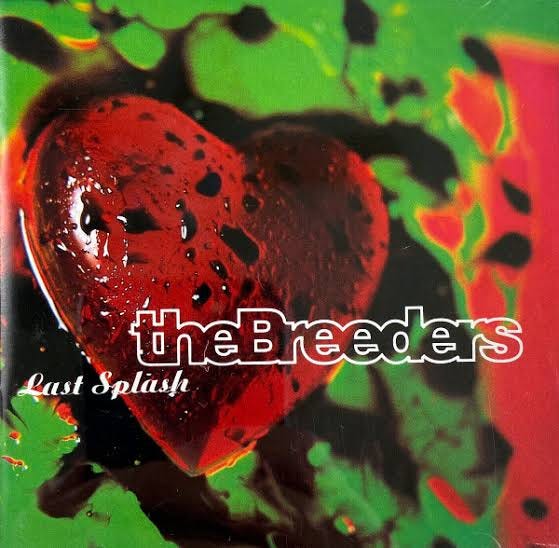
The Breeders — “Cannonball” (1993)
Freedom in the mid-nineties smelled like hot vinyl, unburned hydrocarbons, and dusty air vents. It lived inside a hand-me-down 1988 domestic sedan, with peeling clearcoat on the hood and a sagging headliner pinned up with thumbtacks.
When you opened the door in the middle of the afternoon, the cabin heat hit you in the chest like a physical shove. Everyone piled in and frantically cranked the manual window handles in tight, desperate circles until a cross-breeze cut through the stagnation. Sitting in the passenger seat meant holding the Sony Discman flat on your palms like a waiter carrying a tray of champagne, praying the three-second anti-skip buffer wouldn’t choke on a pothole while its white plastic cassette adapter fed the tape deck.
Then “Cannonball” kicked in.
It didn’t start with a brooding minor-key acoustic arpeggio. It started with Kim Deal’s distorted, underwater vocal chirp — half mic-check, half dare — followed by a frantic, rattling snare roll and Josephine Wiggs’ iconic, dub-heavy bassline walking straight up the spine of the car. And just when the riff caught fire, the song stumbled into a grinning false start, resetting itself before exploding into Kelley Deal’s jagged, surf-punk guitar stabs.
That stop-start lurch was the exact rhythm of an unsupervised summer day. You had no itinerary, no adult obligations, and nowhere you were legally required to be. Grunge was heavy, dragging its feet through mud; “Cannonball” bounced on the balls of its feet. It sounded chaotic, slightly unhinged, and completely unbothered by whether anyone approved of it. You backed out of the driveway, waited for the chorus to hit, and pointed the hood toward the main drag just to see whose car was parked at the gas station.
If no authority is policing you, there is no one you need to obey, placate, or perform for. Autonomy ceased being a lonely burden and became our baseline operational reality.
The Rage in the Passenger Seat

Veruca Salt — “Seether” (1994)
By the summer of 1994, the romantic myth of the tortured rock antihero had collided with a grim wall. Kurt Cobain was dead, and the realization had begun to sink in that performative agony wasn’t a badge of authenticity — it was a trap. Watching grown men in unwashed flannel shirts moan and howl on television suddenly felt claustrophobic.
When Veruca Salt’s “Seether” tore through the blown six-by-nine speakers on the rear parcel shelf, it felt like someone had kicked the windshield out from the inside.
On paper, the guitars were every bit as massive and downtuned as anything coming out of Seattle, thick with mid- scoop fuzz that made the license plate rattle against the trunk lid. But Louise Post and Nina Gordon weren’t wallowing in the muck. Over a ferocious, chugging riff, they layered pristine, sun-drenched harmonies pulled straight from the Beach Boys and the Beatles.
When you were stopped at a red light at a four-lane suburban intersection, four teenagers screaming “Can’t fight the Seether!” out the open windows wasn’t a cry for help. It was a flex. Post and Gordon took female anger — something mainstream culture always tried to package as either fragile sadness or clinical hysteria — and turned it into a grinning, externalized beast. You didn’t internalize the poison until you withered away; you gave it a name, fed it distortion, and rode it down the back roads at fifty miles an hour.
The Air-Conditioned Sanctuary
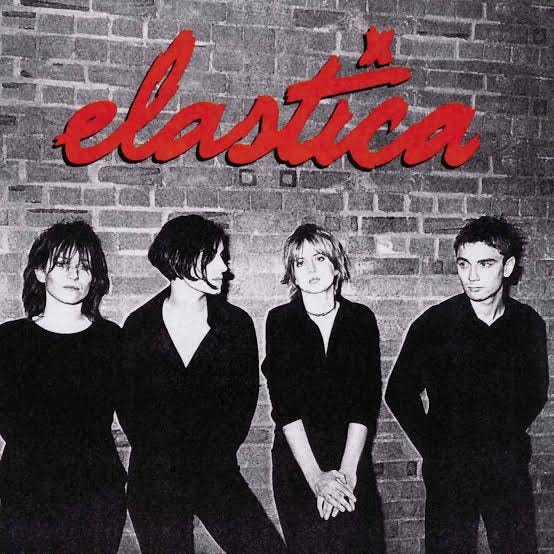
Elastica — “Connection” (1995)
By three o’clock in the afternoon, the asphalt shimmered with heat mirages, your gas gauge was hovering a hair above the red line, and it was time to seek sanctuary.
In the nineties, sanctuary cost exactly two dollars and fifty cents at the second-run discount cinema tucked into the decaying end of a strip mall. You didn’t go to the dollar theater for the cinema; you went for the industrial-grade air conditioning and three hours of unpoliced darkness. You pooled pocket lint and silver coins for a tub of day-old popcorn, slouched down on velveteen seats with broken springs, and watched Pulp Fiction, Clueless, or Speed for the fourth time that month, whispering jokes across the aisle until the usher gave up caring.
Walking back out through the heavy double doors at five o’clock was an assault on the optic nerve — the late-afternoon sun reflecting off three acres of white concrete so brightly it bleached the color out of the world. You stood leaning against the sun-warmed fenders of the car, squinting behind cheap gas-station sunglasses, waiting for the red coil of the dashboard cigarette lighter to pop out with a metallic click.
That exact transition — from dark theater to blinding tarmac, cool and untouchable — belonged to Elastica’s “Connection.”
Clocking in at barely two minutes and twenty seconds, “Connection” was a marvel of brutalist efficiency. Driven by a wiry, staccato Moog synthesizer and a three-chord guitar riff lifted unapologetically from late-seventies British art-punk, the song had zero body fat. Justine Frischmann didn’t scream, and she didn’t bleed for the microphone. She delivered her lines with arched-eyebrow London deadpan, treating modern alienation and desperate desire like a mildly amusing crossword puzzle.
Where early grunge used irony as a defensive shield to hide a bruised heart, this new guard sharpened irony into an offensive weapon.
To a sixteen-year-old realizing that the adult world was a patchwork of broken promises and corporate hypocrisy, Frischmann’s clinical detachment was armor. If the institutions were hollow, crying about them only gave them power over you. Better to stand in the parking lot heat, nod your head to a four-on-the-floor beat, and treat the whole circus with effortless cool.
Irony as High Gloss
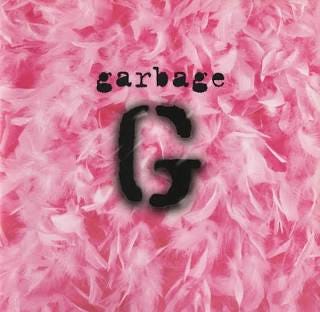
Garbage — “Only Happy When It Rains” (1995)
When the sun finally dropped behind the treeline, the suburban landscape shifted from bleached concrete to neon twilight. The evening headquarters was never someone’s living room — going home meant risking an encounter with a parent who had suddenly remembered they had kids. Instead, you claimed the parking lot of a 24-hour diner or the glowing fluorescent island of a convenience store.
You sat on the hood of the car while moths battered themselves against the overhead sodium lights, nursing ninety-nine-cent paper cups of soda or splitting a basket of crinkle-cut fries inside a vinyl booth. And out of the radio came the ultimate inside joke of the decade: Shirley Manson singing “I’m only happy when it rains” over one of the brightest, glossiest, most infectious grooves ever engineered.
There is a poetic justice in the fact that Butch Vig — the man who recorded Nirvana’s Nevermind and Smashing Pumpkins’ Siamese Dream, effectively building the sonic cathedral of nineties angst — was the same architect who blew it up with Garbage. Sick of the purist rock orthodoxy that demanded four guys in a room bleeding onto analog tape, Vig and his bandmates stuffed their debut album with Akai hardware samplers, chopped hip-hop breakbeats, and Pro Tools micro-edits.
When “Only Happy When It Rains” came on the radio on a warm Friday night, nobody in that parking lot felt miserable. That was the point. Manson’s hyper-dry, intimate vocal sat dead-center in the mix, winking directly at the listener. She was taking four years of alternative rock’s lucrative obsession with depression, holding it up to the fluorescent light, and turning it into high-glamour pop theater. Singing along to “Pour your misery down on me” while laughing with your best friends with the whole weekend ahead of you was the formal burial of grunge sincerity. We knew the gloom was a product they were trying to sell us, and we decided to dance to it instead.
The Open Bypass
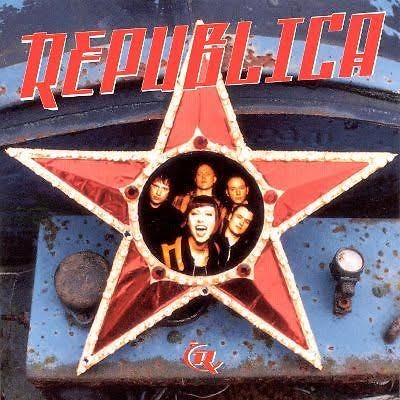
Republica — “Ready to Go” (1996)
Midnight was when the map dissolved completely.
It is almost impossible to explain to anyone born after the turn of the millennium the sheer, electric weightlessness of being seventeen years old at 1:00 AM in 1996 on an unlit suburban bypass. There were no license plate readers mounted to the traffic lights. There were no doorbell cameras cataloguing your departure down the street. Nobody could text you Where are you? and expect the three little dots of an immediate confession.
If you told your parents you were staying at Dave’s house, and Dave told his parents he was staying at yours, the two of you occupied a sovereign phantom zone that existed entirely outside of human bureaucracy.
All four windows are rolled down. The dashboard glows a dim, submarine amber. Warm night air roars through the cabin so loudly you have to shout to be heard from the front seat to the back, and the speedometer needle is creeping past seventy on a stretch of newly paved two-lane blacktop that cuts through dark farmland.
And then Republica’s “Ready to Go” detonates through the stereo.
There isn’t an ounce of Seattle mud left in this track. Clocking in at a breathless 130 beats per minute, it is a collision of British rave synths, big-beat techno propulsion, and overdriven stadium guitars. Saffron isn’t pondering the meaninglessness of existence; she is screaming “I’m standing on the rooftops shouting out / Baby, I’m ready to go!” with pure, unvarnished adrenaline.
In that moment, with your arm hanging out the window planing against the seventy-mile-an-hour wind, the latchkey experience reached its absolute peak. You weren’t an abandoned kid killing time until an adult came home to validate your existence. You were fearless, feral, and self-reliant. You knew how to bump-start a manual transmission in a parking lot, how to bypass a failing electric starter with a pocket knife, how to navigate three counties without a map, and how to take care of your crew when things went sideways. The absence of a safety net didn’t make you afraid of falling; it made you realize that nobody could stop you from jumping.
My Sovereign Territory
Eventually, around 2:30 AM, the gas tank and the adrenaline would finally run dry.
We would coast down the last hundred yards of my street with the headlights clicked off so the beams wouldn’t sweep across the curtains of the master bedroom. The tires would crunch softly over the gravel driveway. I’d turn the key, and the stereo would cut out mid-song, leaving my ears ringing in the sudden, heavy silence of the humid night.
For a minute, I’d just sit there in the dark, listening to the rhythmic tick-tick-tick of the hot exhaust manifold cooling down underneath the floorboards. Then I’d ease the car door shut without latching it all the way, use my lanyard key to unlock the back door, and slip through the dark kitchen without turning on a light. Nobody woke up. Nobody asked where I had been. Nobody checked a screen to verify my alibi. Everyone would grab a couch or a sleeping bag, careful not to wake a soul.
History likes tidy labels, and it is easy to file Generation X away as the melancholic middle child of the twentieth century — a generation defined by ironic detachment and flannel-wrapped gloom.
But for those of us who actually lived inside those summers, the detachment wasn’t apathy. It was sovereignty. We left the house empty, left the keys on the counter, and forgot to watch the clock. So we turned the volume up, rolled the windows down, and lived every moment like it belonged to us.