How AI-Driven Clean-Room Engineering Is Cracking the Subscription Moat
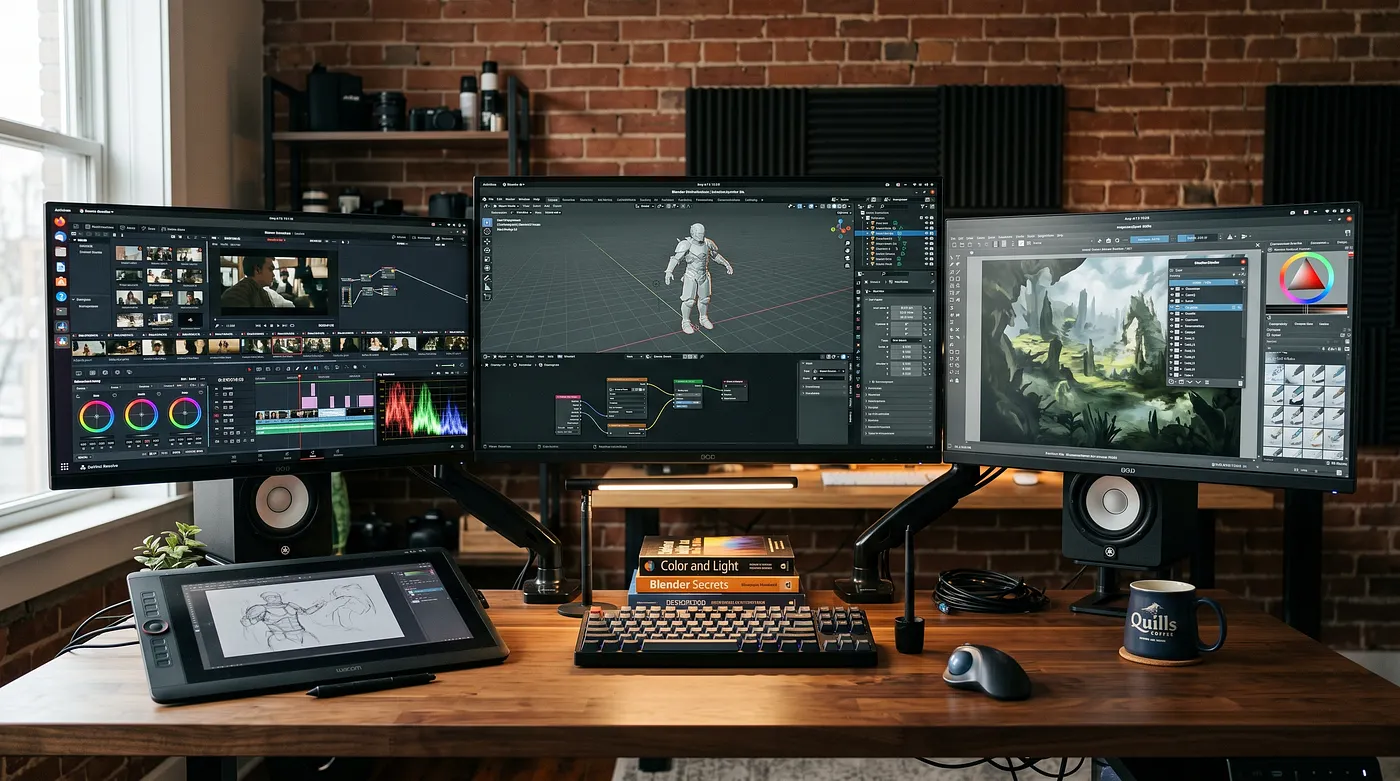
Image by Gemini
Oct 10, 2026 · Madkat Omega
I. The Cracking of the Subscription Fortress
In the first week of June 2024, Photoshop users opened the app to find a pop-up they could not click past. Adobe had updated its terms of use, and the new language said the company could access user content “through both automated and manual methods.” Artists who read that line pictured their unreleased client work feeding an AI model. Within days the backlash was loud enough that Adobe published two clarifications and, on June 18, rewrote the terms to state plainly that it would not train generative AI on customers’ local or cloud content, except work they choose to submit to Adobe Stock. Many creatives noticed something else in that episode. Declining the terms meant losing access to their own files, and canceling an annual plan paid monthly could cost half of the remaining payments.
For more than a decade, the working condition of the creative professional has been tenancy. You rent your tools, and the landlord sets the terms. Adobe ended perpetual licenses for its flagship apps in May 2013. On June 17, 2025, it renamed its All Apps plan Creative Cloud Pro and raised the annual plan, billed monthly, from $59.99 to $69.99 a month for individuals in North America. Microsoft raised Microsoft 365 Personal from $69.99 to $99.99 a year in January 2025, folding in its Copilot assistant, and lifted most business plans on July 1, 2026, with Business Standard climbing from $12.50 to $14 per user each month. In March 2026, Adobe agreed to settle a federal lawsuit accusing it of hiding early termination fees and obstructing cancellations, paying $75 million to the government and promising another $75 million in free services to affected customers, while denying wrongdoing.
Creators tolerated all of it because the alternatives could not match the breadth of the incumbents. Call that advantage the surface-area moat. Photoshop’s defense was never one brilliant algorithm. It was thirty years of accumulated edge cases: dozens of blend modes, obscure filters, legacy file quirks, font metrics, plug-in ecosystems, and the keyboard shortcuts that a working retoucher fires off hundreds of times a day without thinking. Any challenger had to rebuild that entire surface before a professional could switch without losing speed, and for a volunteer project, the surface was simply too large to cover.
That moat is starting to crack. Three developments are converging. AI coding agents can now turn public file specifications and observed program behavior into working software at a pace no volunteer team could match. Modern systems languages such as Rust, paired with graphics interfaces that run directly on the GPU, let new projects start without decades of legacy code. And the Linux desktop has quietly fixed the color management and audio plumbing that kept serious creative work on macOS and Windows. Wall Street has already registered the shift. In early 2026, investors sold off subscription software stocks so sharply that a Jefferies strategist named the episode the “SaaSpocalypse.” For anyone who makes things for a living, the more interesting story is what is being built in the space the incumbents are losing.
II. How AI Attacks the “Decade Problem”
GIMP and LibreOffice spent a quarter century defending the idea that everyone deserves free professional tools, and they deserve more credit than they usually get. Their trap was arithmetic. A volunteer team could spend a year or more building a non-destructive layer stack or untangling another corner of the Word file format, all while racing an incumbent funded by enterprise revenue. GIMP 3.0, the release that finally brought non-destructive filters, arrived in March 2025 after seven years of development. Open projects also tended to invent their own menus, tool behaviors, and shortcuts, partly out of caution about intellectual property and partly from their own design philosophies. For a professional whose income depends on reflexes, that divergence turned every switch into months of retraining, which is a cost no deadline-driven studio can absorb.
Generative AI changes the economics of that race. A clean-room implementation is the traditional method for rebuilding software legally. One team writes a specification of how a program behaves, and a second team that has never seen the original source code builds a new program from that specification alone. The method was always slow and expensive. AI coding agents can now read public format specifications, test files, and documented behavior, write code against them, run the tests, and iterate around the clock. They do not tire of implementing the twenty-seventh blend mode or the next obscure chunk of the Photoshop file format.
The most dramatic demonstration arrived at the start of October 2026. A project called ArtCraft published free, open source rebuilds of seven Adobe flagships under the MIT or Apache 2.0 licenses: PhotoCraft for Photoshop, VectorCraft for Illustrator, FilmCraft for Premiere Pro, LightCraft for Lightroom, EffectCraft for After Effects, DesignCraft for InDesign, and PrintCraft for Acrobat. Each is written from scratch in Rust and ships native builds for macOS, Windows, and Linux. Their developer, Brandon Thomas, a former Square engineer who previously ran Storyteller.ai, built them with Anthropic’s Claude Opus 5.5, at times running eight AI agents in parallel. EffectCraft records its first commit on October 1, 2026, and already lists 306 effects. By October 8, the same GitHub organization also hosted DeckCraft and GridCraft, open source rebuilds of PowerPoint and Excel, and PhotoCraft had passed 24,000 stars on GitHub.
The defining choice is muscle-memory parity. PhotoCraft reproduces Photoshop’s panels, menus, and shortcuts so a retoucher does not have to relearn the job. FilmCraft describes itself as an editor for people who know Premiere and ships keyboard presets for Premiere Pro, Final Cut Pro, and Avid layouts. It also writes its own H.264, HEVC, ProRes, and AAC codecs from the public specifications, with no third-party video library underneath.
The projects are early, and their own documentation says so with unusual candor. PhotoCraft’s roadmap, updated on October 7, puts real parity with Photoshop well below 50 percent. Only 115 of 170 test files in one PSD corpus render pixel for pixel, and the team estimates a professional could switch for daily work only 25 to 35 percent of the time. Gizmodo’s Mike Pearl built a quick composite in PhotoCraft, found every command where he expected it, watched Free Transform misbehave, and summed it up as using “glitchy, but real, Photoshop.” Testers on Hacker News reported lag and unresponsive shortcuts. Thomas originally aimed for parity within a month and now says it will take months rather than years. Even that revised timeline would have sounded absurd for a seven-app suite just two years ago.
The office side has its own experiment. On August 3, 2026, the AI company Genspark released GenOffice, an Apache-licensed suite with editors for Word, Excel, PowerPoint, and PDF files, built by a single engineer working with about $10,000 worth of AI tokens. It takes a different technical path from ArtCraft. GenOffice runs inside Electron, the web-based desktop framework, and builds on existing open source parts such as the Univer spreadsheet engine and a Rust component for reading Excel files. Its clever idea is file preservation. It archives the original document untouched and writes back only the fragments a user actually changed, so formatting the editor does not understand survives the round trip. For now it runs on Windows and Apple Silicon Macs, and its AI features draw on Genspark’s cloud credits.
The legal footing for muscle-memory parity is favorable but not fully settled. In Lotus v. Borland, decided in 1995, the federal appeals court in Boston ruled that the menu command hierarchy of the Lotus 1–2–3 spreadsheet was an uncopyrightable “method of operation,” the way the controls of a car belong to no one. When the case reached the Supreme Court in 1996, the justices split 4 to 4, so the ruling stands only in that circuit. In Google v. Oracle in 2021, the Supreme Court ruled 6 to 2 that Google’s reuse of Java’s programming interface was fair use, while expressly declining to decide whether such interfaces can be copyrighted at all. Both decisions lean toward the freedom to reimplement familiar command structures, which is why the new projects can copy the shape of the work without copying its code. Neither one is a blanket guarantee.
III. Technical Evidence: Why New Tools Can Outgrow the Originals
The ambition behind this wave goes beyond imitation. A program started in 2026 does not have to carry decisions made in 1990, and that freedom shows up first in architecture. The ArtCraft apps are written in pure Rust, a systems language designed to prevent whole classes of memory bugs, with an interface toolkit called egui and no Electron shell or embedded web page. PhotoCraft renders on the graphics card through wgpu, a graphics layer that runs the same code on Apple’s Metal, the cross-platform Vulkan standard, Microsoft’s DirectX 12, and the WebGPU standard in browsers. That is why six of the seven apps also run inside a web browser. The projects state that they need no account and collect no telemetry. A young codebase can also put the graphics card at the center from day one, instead of retrofitting acceleration onto an engine designed for the processors of another era.
None of that guarantees speed, and the projects are frank about where they fall short. FilmCraft still decodes video in hardware only on macOS, and its color, keying, and export still run on the main processor. What the architecture offers is headroom. Every improvement lands in one modern codebase that anyone can read, profile, and fix, and an AI agent can be pointed at the slowest function the same afternoon a user reports it.
The second advantage is how these tools treat artificial intelligence. The incumbents have bundled AI as a metered product. Creative Cloud Pro includes 4,000 monthly credits for Adobe’s premium generative features, and Microsoft 365 Personal subscribers receive a monthly allotment of AI credits for Copilot. The new open tools treat the application itself as something an agent can operate. Every ArtCraft command is exposed to scripts through a command-line interface and an optional server built on the Model Context Protocol, the open standard that lets an AI assistant read and act inside other software. Penpot, the open source design platform, offers an official server of the same kind and lets teams connect any AI model they trust. Blender has long exposed nearly everything through its Python programming interface. In practice, that means an assistant can be asked to batch rename two hundred layers, rebuild a layout for five social media sizes, or apply a color grade across a folder of clips, and it can carry out the work inside the program instead of generating a picture in someone else’s cloud.
Openness about the code does not automatically mean local AI, and the distinction matters. GenOffice routes its AI features through Genspark’s cloud service, which in turn passes text to third-party model providers. ArtCraft funds its free apps by selling optional credits for generative image and video models, starting at $10 a month on an annual plan. The difference from the incumbents is choice. When the protocol is open, you decide which model touches your files, and you can choose one running on your own hardware.
The strongest evidence that open tools can lead a creative field comes from two projects that stopped trying to be clones. Blender began as an in-house tool at a Dutch animation studio and now spans modeling, sculpting, simulation, rendering, compositing, and video editing. Its Grease Pencil system lets artists draw 2D animation inside a 3D scene, and its Geometry Nodes system builds models and effects procedurally. Blender 5.2, released on July 14, 2026, is a long-term support version maintained until July 2028, and its funding now includes Netflix Animation Studios at the Development Fund’s top corporate tier. Krita made the same bet on painting. It offers more than nine distinct brush engines, a wrap-around mode for painting seamless tiling textures, and OpenColorIO support for high dynamic range work, a capability Krita describes as unique among painting programs. Krita 5.3 and 6.0 arrived together on March 24, 2026, with a rewritten text tool and better handling of Photoshop files.
DaVinci Resolve is often cited in the same breath, and it deserves a precise label. Blackmagic Design gives away a remarkably capable free edition, but the software is proprietary. It proves that a free tool can hold its own in professional post-production, a lesson that applies to open source just as well.
Blender and Krita point to a pattern. When an open project commits to a modern architecture and a clear specialty, community momentum compounds, and the incumbent stops setting the pace. AI coding agents now give the 2D and office categories a chance to repeat that story far faster.
IV. The Operating System Shift: Linux Grows Up for Creators
The film industry settled the question of Linux long ago. In a 2021 survey by the Visual Effects Society’s technology committee and the VFX Reference Platform working group, 88 studios representing roughly 60,000 artists named Linux their preferred operating system and expected its share of workstations to grow. The same studios asked for better Adobe support on Linux, because Adobe sells none of its creative applications for it. Individual creators faced a stranger paradox. The platform trusted by the biggest effects houses felt hostile on a freelancer’s desk, mainly because two pieces of everyday plumbing were unreliable: color on screen and sound in sync.
Color came first. For years, the modern Linux display system, called Wayland, had no standard way for an application to tell the desktop what colors it meant to show. A photo graded on a wide-gamut monitor could look different in every program, and HDR video was out of reach. In February 2025, after five years of design work and more than 800 review comments, the color management and HDR protocol known as color-management-v1 was merged into the official Wayland protocols and shipped in version 1.41. It lets an application describe the color space of its content and learn the characteristics of each display, so the desktop can render both accurately. GNOME added support in version 48 in March 2025. KDE Plasma now applies a separate ICC profile to each monitor, and its 6.7 series extended ICC profile support to HDR mode. Calibrating a multi-monitor Linux workstation has become a matter of settings rather than workarounds, though rough edges remain on some high-brightness displays.
Sound was the other obstacle. Linux long split audio between PulseAudio, built for everyday desktop sound, and JACK, built for low-latency studio work, and getting the two to cooperate was a rite of passage for frustrated musicians. PipeWire replaced both. It was designed from the start to serve consumer playback and professional real-time audio with the same engine, adjusting its latency to the task, and existing JACK applications run on top of it unchanged. Fedora made PipeWire its default in version 34 in April 2021, and Ubuntu followed in version 22.10. For a video editor, that means the audio stack under the timeline is the same one handling the microphone, the headphones, and the screen recorder.
The applications are arriving to take advantage. Blender, Krita, GIMP, Inkscape, Kdenlive, darktable, Ardour, and LibreOffice all ship for Linux, and every ArtCraft app offers native Linux packages, which makes the suite one of the first serious options for Photoshop-style and Premiere-style work on that platform. A creator can now build a workstation around Linux and give up neither calibrated color nor dependable sound, and the money that once went to software licenses can go into a better monitor or a faster graphics card.
V. The Economic and Cultural Payoff for Startups and Creators
Run the numbers for a ten-person creative agency at current list prices. Creative Cloud Pro for teams costs $99.99 per license each month on an annual plan, or $1,199.88 per seat per year. Microsoft 365 Business Standard now costs $14 per user each month, or $168 a year. Together that comes to $1,367.88 per person, and $13,678.80 a year for the team, before stock images, fonts, extra cloud storage, or the long tail of smaller apps that renew quietly every month. Not every seat needs the full Adobe bundle, and promotions can lower the first year, but for a young company that figure can equal a junior designer’s first months of salary or a full refresh of the team’s monitors. Every seat that moves to an open tool returns that money to hardware, talent, or runway.
The cultural payoff is ownership. Local-first software keeps your files on your own drive and works without an internet connection or a license check. The ArtCraft apps run offline with no account. LibreOffice 26.8, released on August 26, 2026, carries no advertising, no telemetry, no subscription, and no account requirement. Files saved in open formats such as SVG, OpenRaster, and the OpenDocument standard can be opened by any software that follows those specifications, which protects a portfolio long after any one vendor changes its pricing or its terms.
Governments have already tested that logic at scale. The German state of Schleswig-Holstein made LibreOffice its binding office standard, moved nearly 80 percent of its workplaces outside the tax administration off Microsoft Office, and expects to save more than 15 million euros in license fees in 2026, against a one-time investment of 9 million euros to complete the move. Denmark’s Ministry of Digital Affairs began moving staff from Microsoft Office to LibreOffice in June 2025. On October 31, 2025, the International Criminal Court in The Hague confirmed that it was replacing Microsoft Office with openDesk, a German open source suite, after reports that its chief prosecutor lost access to his Microsoft email following United States sanctions, a claim Microsoft has disputed. For a small studio, the lesson is practical rather than political. Software you rent can be repriced, changed, or withdrawn by someone else.
The new model is also modular. Instead of one bundle that does everything adequately, a studio can assemble the best tool for each job. Illustrators can paint in Krita. Motion and 3D work belongs in Blender. Video editors can cut in Kdenlive, or in the free edition of DaVinci Resolve when a project demands its color tools. Sound lives in Ardour for music production and Audacity, which reached version 4.0 in September 2026, for podcasts and quick fixes. Image and design work can run through GIMP 3.2, Inkscape, and Penpot, with PhotoCraft and VectorCraft installed on a test machine to track their rapid progress. Photographers have darktable today and LightCraft to watch. Documents, spreadsheets, and slides go to LibreOffice, with GenOffice worth a look for anyone who wants AI built into the editor. Each piece can be swapped out the day something better appears, without renegotiating a contract.
VI. The Road Ahead: Legal Questions, Enterprise Caution, and Where This Leads
A freelancer can switch tools on a Tuesday. A large company has lawyers, auditors, and client contracts, and its caution is rational. Commercial vendors stand behind their software with support agreements and, often, legal protection if a customer is sued over the product. A community project offers none of that by default. Copyright is also only part of the risk. A clean-room process protects against claims of copying code, but it does nothing against patents, and Adobe holds a large portfolio covering features and workflows. When Phoronix covered ArtCraft’s launch, it flagged the potential for legal challenges to AI-built clean-room work, and no court has yet tested the projects’ position.
AI adds a newer question about what “clean room” means when a model writes the code. Large language models are trained on enormous amounts of public source code, and nobody can fully audit what a model remembers. The question surfaced in March 2026, when the maintainer of chardet, a widely used Python library, released a ground-up rewrite produced with Anthropic’s Claude Code and changed its license from the copyleft LGPL to the permissive MIT license. The library’s original author, Mark Pilgrim, objected that the rewrite could not count as clean room because the maintainer had worked inside the old code for years. The maintainer countered that he started from an empty repository and instructed the model not to draw on GPL-licensed code. The dispute remains unresolved. Ownership of AI-written code is unsettled too. In January 2025, the U.S. Copyright Office concluded that material generated entirely by AI, without sufficient human creative control, cannot be copyrighted, and that human contributions must be judged case by case. Open source licenses rest on copyright, so the meaning of a license on largely machine-written code is a question courts may eventually have to answer.
None of this argues for waiting on the sidelines. It argues for a sensible rollout. Install early-stage tools on a test machine, work only on copies of real files, and keep established tools for anything with a client deadline. Download from the official project pages or verified releases, since popular repositories attract thousands of copies and impostors. Treat untrusted files with care, too. PrintCraft’s own team reports that automated testing still finds crashes on deliberately malformed PDFs. Larger organizations can run open tools in contained environments for internal and batch work while client-facing files continue to travel in the formats clients expect, then widen adoption as each tool proves itself.
The long-term trajectory is easier to see than the legal details. As AI makes feature code cheap to produce, the value in creative software moves toward the things code alone cannot supply: open file formats that outlast any vendor, the freedom to choose which AI touches your work, efficient software that respects your hardware, and communities that fix what their users need. Those happen to be the strengths of open source.
Picture the next time a pop-up blocks a project file and asks for a signature on new terms. A designer reads it, closes it, and opens the same file in an editor whose menus sit where her hands expect them, whose source code anyone can read, and whose license will still say the same thing next year. The exodus begins with moments like that one, a single file opened in a tool its owner actually controls.
Sources
Subscriptions, prices, and terms
- Jim Thacker, “Adobe updates its Terms of Use following artist backlash,” CG Channel, June 20, 2024. cgchannel.com
- Malwarebytes, “Adobe clarifies Terms of Service change, says it doesn’t train AI on customer content,” June 12, 2024. malwarebytes.com
- Amber Neely, “Adobe hikes Creative Cloud prices with a rebrand no one asked for,” AppleInsider, May 20, 2025. appleinsider.com
- Heather Miller, “Adobe settlement includes $75M in ‘free services’ for some users: What to know,” FOX 5 New York, March 13, 2026. fox5ny.com
- Microsoft, “Copilot is now included in Microsoft 365 Personal and Family,” Microsoft 365 Blog, January 16, 2025. microsoft.com
- RTTNews, “Microsoft Announces Worldwide Price Hike For Microsoft 365 Subscriptions,” Nasdaq, December 2025. nasdaq.com
- Adobe, Creative Cloud plans for business, list pricing. adobe.com
- DeepLearning.AI, “Claude Cowork Plugins Trigger a SaaS Stock Selloff, but Partnerships Lead to Slight Rebound,” The Batch, February 27, 2026. deeplearning.ai
AI-built clean-room projects
- Michael Larabel, “AI Makes Open-Source, Clean Room Implementations Of Adobe Photoshop and Premier In Rust,” Phoronix, October 7, 2026. phoronix.com
- Florian Burnel, “PhotoCraft, FilmCraft, LightCraft : la suite Adobe réécrite en Rust par des agents Claude Opus 5.5,” IT-Connect, October 8, 2026, in French. it-connect.fr
- IT Pro Expert, “Goodbye Adobe! New free, open-source Adobe looking alternatives for Windows, Mac and Linux,” October 8, 2026. itproexpert.com
- Mike Pearl, Gizmodo, hands-on report on PhotoCraft, October 2026. gizmodo.com
- ArtCraft, PhotoCraft roadmap, updated October 7, 2026. github.com
- ArtCraft, FilmCraft project page. github.com
- ArtCraft, Crafting Apps overview. getartcraft.com
- Sourav Rudra, “This New Open Source Project Wants to Be the AI-First Alternative to Microsoft Office,” It’s FOSS, August 5, 2026. itsfoss.com
- Genspark, GenOffice project page. github.com
Law and legal questions
- Washington Legal Foundation, “Google v. Oracle: Fair Use Applies But Copyrightability Questions Remain,” April 12, 2021. wlf.org
- “Will the Supreme Court take Google’s appeal in the Android-Java copyright case?” Mass Law Blog. masslawblog.com
- LWN.net, “The relicensing of chardet,” March 2026. lwn.net
- U.S. Copyright Office, “Inside the Copyright Office’s Report, Copyright and Artificial Intelligence, Part 2: Copyrightability,” February 2025. blogs.loc.gov
Open source tools and their funding
- The GIMP Team, “GIMP 3.0 Released,” March 16, 2025. gimp.org
- Blender Foundation, “Blender 5.2 LTS,” July 14, 2026. blender.org
- Jim Thacker, “Netflix Animation Studios donates €240k/year to Blender dev fund,” CG Channel, January 28, 2026. cgchannel.com
- Krita Foundation, “Krita features.” krita.org
- Michael Larabel, “Krita 6.0 Released With Qt6 Port and Better Wayland Support,” Phoronix, March 24, 2026. phoronix.com
- Penpot, “Penpot MCP Server.” penpot.app
- Michael Larabel, “Audacity 4.0 Audio Editor Released With Qt6 Based UI,” Phoronix, September 3, 2026. phoronix.com
- Michael Larabel, “LibreOffice 26.8 Released With Many Nice Improvements,” Phoronix, August 26, 2026. phoronix.com
- Cybernews, “MS Word alternative LibreOffice releases an updated version deliberately free of AI,” August 2026. cybernews.com
Linux on the creative desktop
- Digital Production, report on the Visual Effects Society studio platform survey, January 21, 2022. digitalproduction.com
- VFX Reference Platform, “Linux in VFX.” vfxplatform.com
- Michael Larabel, “Wayland Color Management and HDR Protocol Support Merged,” Phoronix, February 13, 2025. phoronix.com
- Michael Larabel, “GNOME 48 Mutter Merges Wayland’s wp_color_management_v1 Support,” Phoronix, February 25, 2025. phoronix.com
- Michael Larabel, “KDE Plasma 6.7 To Support ICC Profiles In HDR Mode,” Phoronix, May 8, 2026. phoronix.com
- LWN.net, “PipeWire: The Linux audio/video bus,” 2021. lwn.net
- Fedora Project, “Route all Audio to PipeWire.” fedoraproject.org
Public sector migrations
- State Government of Schleswig-Holstein, press release on LibreOffice as the binding office standard, December 4, 2025, in German. schleswig-holstein.de
- Computing, “Denmark’s Digital Ministry shifts from Microsoft to LibreOffice in push for sovereignty and savings,” June 2025. computing.co.uk
- Open Source For You, “International Criminal Court Drops Microsoft 365 For Open Source openDesk Platform,” November 2025. opensourceforu.com